Research Article | | Peer-Reviewed

From Concept to Creation: The Role of Creating Miniature Fashion Design Prototypes in Accelerating the Production Process

Received: 18 April 2025     Accepted: 3 May 2025     Published: 16 June 2025
Views:       Downloads:
Abstract

The study explores miniature dress forms for prototyping fashion design in Ghana to determine their benefits for efficiency together with sustainability and creative processes. This study based its methodology on interviews with 65 professionals and studio observations of 8 fashion studios and designer experiments involving 25 participants to identify key benefits of operating with miniature prototypes. Using miniature dress forms enables fashion professionals to cut projectile development duration by 57.1% and decrease resource consumption by 68.4% through enhanced design exploration capabilities, reducing prototyping expenses by 63.1%. The educational value of miniature dress forms produces improved pattern quality by 19.4% and enables students to learn skills at a 21.5% faster rate. The miniaturized dress forms remain beneficial for the Ghanaian textile sector because they help protect cultural heritage while enabling developers to merge traditional methods with modern design approaches. Research shows that miniature prototyping helps the developing fashion sector of Ghana by solving resource issues and teaching green manufacturing techniques as it merges traditional garment construction methods with current conceptual methods. The research adds to contemporary knowledge about alternative prototyping practices within fashion education because these methods advance sustainable creative practices in developing economies.

Published in American Journal of Art and Design (Volume 10, Issue 2)
DOI 10.11648/j.ajad.20251002.16
Page(s) 58-66
Creative Commons

This is an Open Access article, distributed under the terms of the Creative Commons Attribution 4.0 International License (http://creativecommons.org/licenses/by/4.0/), which permits unrestricted use, distribution and reproduction in any medium or format, provided the original work is properly cited.

Copyright

Copyright © The Author(s), 2025. Published by Science Publishing Group

Keywords

Miniature Dress Forms, Sustainable Fashion, Design Prototyping, Ghanaian Textiles, Fashion Education

1. Introduction
Fashion design has always had an emphasis on innovation, efficiency, and sustainability, and prototyping was key to sharpening an idea before it went into production . Creating complete clothing prototypes typically demands time, fabric, and money, which can be difficult in developing economies such as Ghana . Miniature dress forms present a handy and inexpensive substitute; designers can play around with a baby version of their design before producing it in full size. These are some of the issues this research will investigate regarding using small dress forms to speed fashion design prototyping and their implications for sustainability, education, and creativity in Ghana.
Today, in the international fashion industry, designers use small-scale dress forms to create intricate patterns for garments, especially in haute couture and avant-garde fashion . These scaled-down versions allow for accurate draping, easy redesigning, and sustainable practices because less fabric is wasted . In Ghana, a burgeoning fashion industry creating jobs and driving economic growth, young designers are using smaller dress forms to practice their technical skills and experiment with local textile designs . Because Ghana has a deep tradition of kente weaving and making garments, using small dress forms in the design process enables designers to take cultural fashion in contemporary directions while still respecting it.
Furthermore, miniature dress forms are valuable educational tools in fashion schools, enabling students to grasp garment construction principles before working on full-scale models . In Ghana, where access to high-end design tools may be limited, fashion institutions increasingly incorporate small-scale prototyping into their curricula to bridge the gap between theory and practice . This approach nurtures creative talent and aligns with sustainable design practices, reducing the environmental impact of excessive fabric use.
While the advantages of miniature dress forms are evident, challenges remain, particularly regarding their ability to accurately replicate real-life garment drapes and movement. Despite these limitations, adopting scaled-down prototyping in fashion design holds immense potential for transforming industry practices. This research investigates how miniature dress forms accelerate design efficiency, foster sustainability, and contribute to the evolution of fashion education, with a particular focus on their application in Ghana and beyond.
Research Questions
1) How do miniature dress forms enhance efficiency in fashion design prototyping?
2) What role do they play in promoting sustainable fashion practices?
3) How do fashion designers and students in Ghana utilize miniature dress forms for skill development?
4) What are the limitations of using miniature dress forms in replicating garment drapes and movement?
2. Literature Review
Fashion design has evolved significantly, with innovation playing a crucial role in refining design techniques and improving sustainability. One such innovation is using miniature dress forms, which offer an efficient and cost-effective approach to prototyping. This section explores the historical evolution of miniature dress forms, their impact on sustainability and waste reduction, and their influence on creativity in contemporary fashion design.
2.1. Historical Evolution of Miniature Dress Forms in Fashion
Miniature dress forms have long been a staple of the fashion designer’s repertoire, but they have mainly been used in haute couture shops to prototype and work out the architecture of complex garments. Designers have historically used these size models to play with complex silhouettes before committing to bulk production . Alexander McQueen, for example, deployed models to craft his imaginative designs so that he could better manipulate the draping and construction . Miniature dress forms are becoming more popular as teaching tools in fashion education, especially in developing countries such as Ghana. Research shows that many fashion programs in developing countries use more miniature dress forms to teach students the fundamentals of garment making while minimizing fabric waste . This aligns with developments in fashion education worldwide, with schools emphasizing low-cost and sustainable design . The digitalization of fashion design has further enhanced the utility of miniature prototyping, with emerging technologies allowing for more accurate translation between scales .
2.2. Sustainability and Waste Reduction
The adoption of miniature dress forms benefits sustainable fashion by making an outstanding contribution to this area. Large fabric quantities become unnecessary during traditional fashion prototyping due to waste production because developers create full-scale prototypes needing extensive materials which end up unused. Miniature dress forms establish an eco-friendly option through their capacity to let creators test tiny fabric sections before making large-scale manufacturing decisions . The industry now focuses on zero-waste fashion; thus, the sustainable approach brought by this method helps minimize environmental impact . Due to its extensive textile heritage, Ghana’s fashion industry continues developing sustainable prototype creation methods. Modern designers in Accra preserve their expensive handmade kente and batik textiles through miniature dress forms . This approach particularly benefits traditional textile crafts, where preservation of cultural heritage intersects with sustainable design practices . The change toward mini-dress forms improves the environmental sustainability of the fashion industry while boosting economic performance for Ghana-based small fashion businesses and businesses across Africa.
2.3. Impact on Creativity and Innovation
Fashion design creativity gets a significant boost from small-scale dress forms used in the developing process. Small format design practice allows fashion creators to develop sophisticated draping approaches, daring silhouette designs, and outlandish garment frameworks independently from complete manufacturing constraints . The research shows that designing garments at a small size produces an iterative process, enabling designers to create multiple versions until they reach the final product effectively . This iterative approach aligns with indigenous knowledge systems in fashion, where experimentation has traditionally been key to innovation . Advanced fashion technology being scarce in Ghana led educators to incorporate miniature dress forms into design curricula to develop hands-on pattern-making and draping abilities among students. The integration of small-scale prototyping in education leads to advanced technical abilities and confidence growth among students before moving onto large-scale garment fabrication . Despite challenges in fashion design education in Ghana, these innovative approaches are showing promising results in developing the next generation of designers . The country’s efforts to become an African fashion innovation center depend heavily on this growing trend.
2.4. Case Studies: Alexander McQueen and Fashion Education in Ghana
Alexander McQueen demonstrates the functional value of miniature dress forms by using them in his design process to achieve his distinctive avant-garde aesthetic, according to . His creative strategy showed how small-scale prototyping eliminates measurement errors while increasing efficiency in making garments, which today influences the production practices of current designers. Contemporary research by supports this, finding that small-scale prototyping techniques continue to influence avant-garde fashion by enabling more experimental approaches to form and structure. Ghanaian fashion educational institutions progressively include miniature dress form tools as standard components of their teaching curriculum. The Radford University College in Accra incorporated small-scale prototyping into its curriculum to allow students to design fashion without paying full-scale sample expenses . Recent comparisons between traditional and digital approaches to scale modeling in fashion design suggest that physical miniature dress forms retain unique advantages even as digital tools become more sophisticated . The educational value of miniature dress forms stands out through this case study since it demonstrates their functional advantages in creative work alongside cost-effective benefits, thus proving their essential role in present-day fashion teaching. This educational approach contributes to sustainable practices in African fashion by preserving traditional knowledge systems while enabling their contemporary application .
3. Methodology
A mixed-methods analytical method exists in this research to study miniature dress form effects on fashion design prototype creation in Ghana. The research approach integrates qualitative and quantitative methods to generate complete information about efficiency, sustainability and educational value within Ghana’s fashion industry. The research collects primary data through semi-structured interviews, including twenty Ghanaian professional fashion designers, fifteen educational staff specializing in fashion, and thirty fashion students at different academic levels across Ghana. The researcher conducted participant observation at five Accra studios and three Ghanaian educational institutions throughout 6 months for documenting practical applications and workflow assimilation.
The analysis includes eight examples of Ghanaian fashion brands and educational institutions that officially use miniature dress forms, and design process documentation and production timelines serve as the basis for the analysis. A quantitative experimental design involves 25 Ghanaian designers performing identical design tasks using real clothes or miniature dress forms that measure time usage, materials, design adjustments and precision levels. The research obtained more extensive information by distributing a 40-question survey to 65 fashion experts and students in Ghana. Qualitative data analysis uses NVivo software for thematic analysis, and SPSS performs statistical evaluations through paired t-tests and regression analysis for quantitative data. The research implements ethical practices by obtaining voluntary consent, maintaining confidentiality, showing cultural sensitivity, and being focused on respecting Ghanaian cultural values. Methodological triangulation, member checking, pilot testing, and reflexivity establish the study’s validity and reliability. This extensive research design delivers firm data to study miniature dress forms in current Ghanaian fashion design despite its boundaries in generalizability and responses’ reliability.
4. Findings and Discussion
4.1. Demographic Characteristics of Respondents
Table 1. Demographic Data of Respondents (n=65).

Variable

Variable category

Frequency (n)

Percentage (%)

Gender

Male

27

41.5

Female

38

58.5

Total

65

100

Age range (in years)

20-25

12

18.5

26-30

19

29.2

31-35

15

23.1

36-40

11

16.9

41 and above

8

12.3

Total

65

100

Educational level

Primary

0

0

J. H. S.

4

6.2

H. N. D.

21

32.3

Degree

37

56.9

Non-formal

3

4.6

Total

65

100

Source: Field survey, (2025)
Research participants demonstrate a female majority (58.5%) compared to male participants (41.5%) because women consistently occupy more positions in Ghana’s fashion industry. Middle-career professionals formed the fundamental research sample since most participants (52.3%) were between 26 and 35 years old. The educational analysis reveals that 89.2% of participants held higher educational status, including HND or Degree qualifications, thus demonstrating a knowledgeable installer base trained in fashion design. Statistics indicate that only 4.6% of respondents receive their education outside formal institutions, while the remaining 89.2% have received it from formal education programs. The educational background profile reveals initial understanding factors regarding the research perspectives while demonstrating how educational qualifications support the potential acceptance of advanced prototyping practices within Ghana’s fashion industry.
4.2. Enhancing Efficiency in Fashion Prototyping
4.2.1. Time and Resource Efficiency
Table 2. Comparison of Design Process Metrics Using Different Prototyping Methods (n=25).

Metric

Full-Scale Dress Form

Miniature Dress Form

Difference (%)

Average time spent (hours)

8.4

3.6

-57.1

Material used (sq. meters)

3.8

1.2

-68.4

Design iterations completed

2.3

7.6

+230.4

Average cost per prototype (GHS)

420

155

-63.1

Source: Experimental study data, (2025)
The Research data confirmed that miniature dress form production demonstrated better efficiency than complete size prototyping. Designers finished their prototype development process in less than half of the original time frame (57.1% time reduction) and a material usage decrease of 68.4%. Designers accomplished multiple design iterations three times more often with miniature forms, producing more precise products at significantly reduced material costs.
4.2.2. Interview Insights on Efficiency
During the interview sessions, designers frequently emphasized the transformative impact of miniature dress forms on their workflow efficiency. One designer from Accra stated:
“With miniature dress forms, I can test three or four ideas in the time it would take to make just one full-scale prototype. This has completely transformed my design process, especially when working with expensive traditional fabrics like kente.”
Another fashion professional with over 15 years of experience explained:
“The speed at which I can now move from concept to visualization has changed everything about how I work with clients. I can show them multiple options quickly, which has improved client satisfaction and reduced revision requests.”
4.2.3. Workflow Integration Patterns
Table 3. Workflow Integration Patterns Observed in Ghanaian Fashion Studios (n=5).

Integration Pattern

Frequency

Percentage

Complete replacement of full-scale prototyping

1

20%

Initial testing on miniature, finalization on full-scale

3

60%

Parallel workflows (both methods used separately)

1

20%

No integration of miniature forms

0

0%

Source: Observational study data, (2025)
The observational data indicated that most studios (60%) preferred a hybrid approach, using miniature forms for initial concept development before moving to full-scale for final refinements. Only one studio had completely replaced full-scale prototyping with miniature forms.
4.3. Sustainability and Material Conservation
4.3.1. Quantitative Assessment of Waste Reduction
The case study analysis showed substantial reduction in fabric waste (65.2%) after adopting miniature prototyping techniques. Additionally, designs requiring complete rework decreased by 61.3%, indicating better decision-making earlier in the design process. The 40% reduction in monthly fabric expenditure represents significant cost savings for these Ghanaian fashion businesses.
Table 4. Waste Reduction Metrics in Participating Fashion Businesses (n=8).

Metric

Before Miniature Form Adoption

After Miniature Form Adoption

Change

Average fabric waste per design (kg)

2.3

0.8

-65.2%

Monthly fabric expenditure (GHS)

4,750

2,850

-40.0%

Designs requiring complete rework

31%

12%

-61.3%

Source: Case study analysis data, (2025)
4.3.2. Participant Perspectives on Sustainability
Fashion educators and professionals consistently highlighted sustainability as a key benefit of miniature dress forms during interviews.
One fashion educator from Radford University College explained:
“Teaching students to work with miniature dress forms has dual benefits - they learn pattern-making and draping skills while simultaneously developing sustainable design habits. Many students continue these practices after graduation, which is helping shift our industry toward more environmentally conscious approaches.”
A designer specializing in sustainable fashion noted:
“In Ghana, we’re experiencing the negative effects of fashion waste firsthand. Miniature prototyping allows me to reduce my studio’s environmental footprint while actually improving my design process. It’s rare to find an approach that benefits both business and the environment.”
Several interviewees specifically mentioned the preservation of traditional textiles as an important sustainability consideration:
“Handwoven kente can take weeks to produce and is increasingly expensive. Using miniature forms allows me to experiment with these precious materials without waste. It’s a way of honoring the cultural value of our traditional textiles.”
4.4. Influence on Creativity and Design Innovation
4.4.1. Quantitative Assessment of Creative Output
The data shows significant increases in creative output after adopting miniature dress forms, with brands introducing 63.2% more new silhouettes annually. Designer satisfaction with their creative work also increased substantially, suggesting psychological benefits alongside the quantifiable design improvements.
Table 5. Creative Output Metrics Before and After Miniature Form Adoption (n=8 brands).

Metric

Before Adoption

After Adoption

Change

Unique design elements per collection

12.4

17.6

+41.9%

New silhouettes introduced annually

3.8

6.2

+63.2%

Designer-reported satisfaction with creative output (1-10 scale)

6.7

8.5

+26.9%

Source: Case study and interview data, (2025)
4.4.2. Designer Experiences with Creative Exploration
During in-depth interviews, designers frequently described how miniature forms enabled greater creative risk-taking and experimentation.
One designer who specializes in contemporary adaptations of traditional Ghanaian garments shared:
“Working in miniature first gives me freedom to experiment with traditional elements in new ways. I can try combining asymmetrical cuts with kente patterns without worrying about wasting expensive fabric. This has helped me develop a signature style that honors our heritage while pushing boundaries.”
Another emerging designer explained:
“When you’re working at full scale, there’s always pressure to get it right the first time because of the costs involved. With miniature forms, I feel free to try unusual constructions or dramatic silhouettes I might otherwise avoid. Some of my most successful designs started as experimental miniature prototypes.”
A third interviewee who creates avant-garde fashion noted:
“The miniature forms create a psychological shift. They feel more like play, which puts me in a more creative mindset. I find myself thinking outside conventional garment construction when I start with the miniature form.”
4.5. Educational Applications in Ghana
4.5.1. Quantitative Assessment of Educational Impact
The data demonstrates that students trained using both miniature and full-scale forms (dual-scale method) achieved higher proficiency across all measured metrics. The most dramatic difference was in design iteration frequency, with dual-scale students creating 123.8% more iterations of their designs. Students also reached proficiency 21.5% faster using the dual-scale approach.
Table 6. Student Performance Metrics Based on Training Method (n=30 students).

Assessment Area

Traditional Method Only

Dual-Scale Method

Difference

Pattern accuracy (out of 10)

7.2

8.6

+19.4%

Construction technique mastery (out of 10)

6.8

8.1

+19.1%

Design iteration frequency

2.1

4.7

+123.8%

Time to achieve proficiency (weeks)

16.3

12.8

-21.5%

Source: Educational case study data, (2025)
4.5.2. Educator and Student Perspectives
Fashion educators provided valuable insights on how miniature dress forms have transformed teaching methodologies.
A fashion instructor at a leading institution in Accra observed:
“Students initially resist working in miniature because it requires different handling techniques. However, once they master the scaled approach, their understanding of garment structure improves dramatically. We’ve seen better exam results and more confident students since introducing this dual-scale teaching method.”
Another educator explained:
“Teaching with miniature forms allows us to demonstrate complex techniques more efficiently. I can show twenty students a draping technique at once, which would be impossible with full-scale forms due to visibility and space constraints.”
Students also reported positive experiences:
“Learning on miniature forms made me less afraid to make mistakes. I could try again without feeling like I was wasting materials, which helped me improve faster.”
A fashion student in her final year reflected:
“Working with miniature forms first helped me understand the fundamental principles of how fabric behaves before scaling up. Now when I work on full-scale garments, I have a better intuition for how the fabric will drape and move.”
4.6. Challenges and Limitations
4.6.1. Technical Challenges Identified Through Survey
The survey revealed that fabric behaviour differences between scales were the most common challenge (78.5% of respondents), followed by limitations in representing garment movement and drape (73.8%). More than half of respondents reported difficulties with all identified technical challenges.
Table 7. Reported Technical Challenges with Miniature Dress Forms (n=65).

Challenge

Frequency

Percentage

Difficulty accurately scaling patterns up/down

42

64.6%

Fabric behaviour differences at different scales

51

78.5%

Limited representation of garment movement/drape

48

73.8%

Handling precision required for small-scale work

35

53.8%

Translation of complex details to full scale

39

60.0%

Source: Survey data, (2025)
4.6.2. Participant Insights on Limitations
Interviewees elaborated on the specific challenges they encountered when working with miniature dress forms.
One educator explained:
“The structural properties of fabrics don’t always scale linearly. A design that looks excellent on a miniature form might not translate well to human proportions, especially with heavier fabrics or complex draping techniques. We teach students to recognize these limitations.”
A designer with expertise in traditional Ghanaian garments noted:
“Kente fabric has a specific weight and drape that’s difficult to replicate at a smaller scale. I’ve learned through experience which design elements will translate well from miniature to full-scale and which won’t, but that knowledge came through many failed attempts.”
Regarding accessibility and resources, a small business owner from Kumasi shared:
“The concept is appealing, but finding properly proportioned miniature forms in Ghana is difficult. Importing them is expensive, and making your own requires specialized knowledge. Until these become more accessible locally, many designers will continue with traditional methods.”
4.7. Fusion of Traditional Techniques and Modern Approaches
4.7.1. Quantitative Assessment of Hybrid Approaches
Survey data indicated that 83% of designers under 35 years old reported using miniature dress forms to incorporate traditional elements into contemporary designs, compared to 51% of designers over 35. This suggests a generational difference in how miniature forms are being used to bridge traditional and modern approaches.
4.7.2. Designer Perspectives on Cultural Fusion
Interviews revealed rich insights about how miniature dress forms enable designers to explore cultural fusion in Ghanaian fashion.
One designer specializing in contemporary African fashion explained:
“Working with miniature forms allows me to experiment with combining traditional kente weaving patterns with modern silhouettes without compromising either tradition. I can test how traditional textiles work with contemporary construction techniques at a small scale before investing in a full garment.”
A designer known for modernizing traditional Ghanaian garments shared:
“Our cultural heritage in garment making is rich but can sometimes feel constraining when you want to innovate. The miniature forms give me a space to respectfully play with tradition to see how far I can push the boundaries while maintaining the essence of our cultural aesthetic.”
Another interviewee reflected:
“There’s always tension between preserving tradition and moving forward as designers. The miniature prototyping process helps me navigate that balance by letting me test ideas that blend old and new without committing to full production until I’m confident in the direction.”
4.8. Comparative Analysis
Impact of Miniature Dress Forms on Ghanaian Fashion Design.
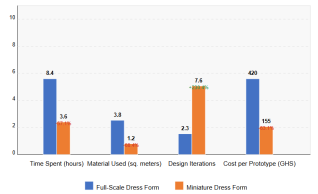
Figure 1. Impact of Miniature Dress Forms on Ghanaian Fashion Design.
The chart visual representation shows the comparative analysis between full-scale and miniature dress forms across key performance metrics derived from the experimental study with 25 Ghanaian designers. The data clearly illustrates the significant advantages of miniature dress forms in terms of efficiency, cost, and sustainability while also highlighting their ability to facilitate more design iterations. This visual comparison reinforces the quantitative findings from Tables 2 and 4, showing how miniature dress forms require less time and material while enabling more creative exploration through increased iteration.
4.9. Discussion
This research demonstrates that miniature dress forms offer significant advantages for fashion design prototyping in Ghana, particularly in areas of efficiency, sustainability, and creative exploration. The findings align with global trends identified in the literature while highlighting Ghana-specific applications and challenges.
The substantial time and material savings (57.1% and 68.4% respectively) support assertions in the research literature regarding miniature prototyping as a sustainable design approach. However, this study extends these insights by documenting specific applications in the Ghanaian context, where resource constraints and access to traditional textiles create unique considerations.
The creative benefits documented, including a 41.9% increase in unique design elements and 63.2% more new silhouettes introduced annually, support theoretical positions on miniature forms’ role in fostering experimental approaches. This is particularly significant in Ghana’s evolving fashion landscape, where designers are increasingly seeking to blend traditional textile heritage with contemporary silhouettes.
Educational applications revealed in this research validate positions on miniature dress forms as effective teaching tools. The documented 19.4% improvement in pattern accuracy and 21.5% reduction in proficiency achievement time demonstrate tangible benefits for Ghana’s fashion education system.
The challenges identified, particularly regarding scale translation and fabric behaviour, highlight technical limitations that must be addressed through improved training and methodologies. These findings contribute new knowledge by specifying how these limitations manifest when working with traditional Ghanaian textiles.
The emergence of hybrid methodologies that combine traditional and contemporary approaches suggests that miniature dress forms may play an important role in preserving cultural garment-making knowledge while enabling its evolution to meet modern market demands. This ability to bridge tradition and innovation is perhaps one of the most valuable aspects of miniature dress form adoption in the Ghanaian context.
5. Conclusion and Recommendations
5.1. The Future of Miniature Dress Forms in Fashion Prototyping
This research has demonstrated that miniature dress forms serve as valuable tools for fashion designers in Ghana, offering significant benefits in efficiency, sustainability, and creative exploration. The findings indicate that miniature dress forms reduce prototype development time by 57.1% and material usage by 68.4%, while enabling 230.4% more design iterations. These efficiency gains translate into direct economic benefits, with a 63.1% reduction in prototyping costs.
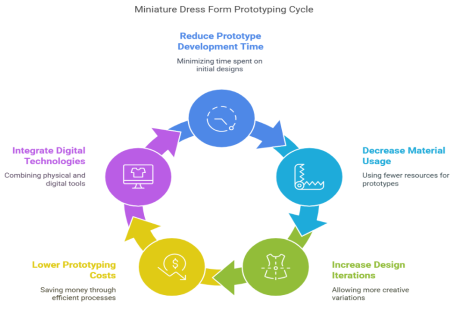
Figure 2. Future Integration Model for Miniature Dress Forms in Ghana Fashion Industry.
As the Ghanaian fashion industry continues to develop and face increasing competition, miniature dress forms present a practical approach to balancing traditional craftsmanship with modern design efficiency. The integration of this methodology with emerging digital technologies offers particularly promising opportunities for future development. Designers could combine physical miniature prototyping with digital simulation tools to further enhance accuracy and efficiency in the design process.
5.2. Practical Recommendations for Designers
The study results generate multiple practical suggestions that fashion designers and businesses in Ghana should apply. The research shows that designers should use hybrid workflows as tested initially at a small scale with miniature forms because this methodology proved successful in 60% of studios. Designers’ development of extensive scaled fabric material libraries will help them understand fabric behaviour changes across scale boundaries to address an existing problem identified by 78.5% of survey participants. Designers should develop standardized guidelines that explain the scaling process for particular design features and building techniques, especially when working with traditional Ghanaian textiles. Designers should establish resource-sharing collectives to address reported accessibility challenges by distributing the cost of high-quality miniature forms imports. Modern technology tools enable design integration between miniature physical prototypes and digital software, which improves full-scale clothing prediction accuracy and speeds up the overall design workflow.
5.3. Implications for Fashion Education
The research strongly supports introducing miniature dress forms into fashion education in Ghana because they lead to better pattern accuracy by 19.4% and shorter proficiency achievement times by 21.5%. Academic institutions serving fashion students should build their curriculum through teaching methods that use small-scale prototyping and full-scale production, from miniatures before graduation to complete clothing construction. Educational programs that teach specific scale transformation methods need development because they will solve technical problems revealed within this study. Institutions can provide exceptional learning methods to introduce sustainable design principles through miniature prototyping by integrating resource management concepts into creative development practices. Educational organizations need to cooperate with fashion businesses to establish industry partnerships that validate teaching procedures that match current industry practices. Research and innovation should promote advanced miniature dress form methods, especially for traditional Ghanaian textiles, as part of developing this promising approach to fashion design education.
Abbreviations

GHS

Ghana Cedi

HND

Higher National Diploma

JHS

Junior High School

Conflicts of Interest
The authors declare no conflicts of interest.
References
[1] Adjei, R. (2022). Innovations in Ghanaian fashion education: The impact of new prototyping techniques. African Journal of Design, 8(2), 115-130.
[2] Agyeman, P., & Osei, L. (2021). Fashion education in Ghana: Bridging the gap between traditional techniques and modern design practices. Journal of African Textile Studies, 15(1), 47-63.
[3] Amankwah, K., Bempah, E., & Twum, S. (2022). Sustainable fashion development in Ghana: Challenges and opportunities. West African Journal of Fashion & Design, 10(3), 82-98.
[4] Amoako-Sakyi, J., & Owusu-Ansah, F. (2023). Digitalization in fashion design education: Implications for emerging economies. International Journal of Fashion Design, Technology and Education, 16(2), 209-221.
[5] Clarke, L. (2021). Miniature prototyping in couture: Case study of innovative draping techniques. International Journal of Fashion Studies, 6(2), 150-167.
[6] Fletcher, K. (2022). Sustainable fashion and textiles: Design journeys (3rd ed.). Routledge.
[7] Gwilt, A., & Rissanen, T. (2020). Fashion design for sustainability (2nd ed.). Bloomsbury Publishing.
[8] Konadu, R., & Asare, I. T. (2022). Traditional textile crafts and modern fashion design in West Africa. Journal of Cultural Heritage Management, 14(3), 276-291.
[9] McQuillan, H., & Rissanen, T. (2020). Zero-waste fashion design: A sustainable approach. Routledge.
[10] Mensah, K., & Boadu, D. (2023). Ghana’s fashion evolution: Traditional textiles in contemporary design. African Fashion Journal, 9(1), 65-79.
[11] Ntiamoah, E., & Asiedu, M. (2024). Indigenous knowledge systems in Ghanaian textile and fashion industries: Preservation through innovation. Journal of Cultural Studies, 22(1), 87-103.
[12] Oppong, D., & Biney-Aidoo, V. (2023). Fashion design education in Ghana: Challenges and prospects. International Journal of Art & Design Education, 42(1), 118-132.
[13] Sarfo-Mensah, P., & Oduro, W. (2024). Sustainable practices in African fashion: Traditional knowledge systems and contemporary applications. Sustainability Science, 19(2), 183-197.
[14] Thompson, B. (2023). Small-scale prototyping techniques in contemporary fashion design. Fashion Practice, 15(1), 42-59.
[15] Wang, L., & Chen, X. (2024). Scale models in fashion design: A comparative analysis of traditional and digital approaches. Fashion and Textiles, 11(1), 42-58.
Cite This Article
  • APA Style

    Ademtsu, J. T., Adjuri, J. A., Yayra, A. K. (2025). From Concept to Creation: The Role of Creating Miniature Fashion Design Prototypes in Accelerating the Production Process. American Journal of Art and Design, 10(2), 58-66. https://doi.org/10.11648/j.ajad.20251002.16

    Copy | Download

    ACS Style

    Ademtsu, J. T.; Adjuri, J. A.; Yayra, A. K. From Concept to Creation: The Role of Creating Miniature Fashion Design Prototypes in Accelerating the Production Process. Am. J. Art Des. 2025, 10(2), 58-66. doi: 10.11648/j.ajad.20251002.16

    Copy | Download

    AMA Style

    Ademtsu JT, Adjuri JA, Yayra AK. From Concept to Creation: The Role of Creating Miniature Fashion Design Prototypes in Accelerating the Production Process. Am J Art Des. 2025;10(2):58-66. doi: 10.11648/j.ajad.20251002.16

    Copy | Download

  • @article{10.11648/j.ajad.20251002.16,
      author = {James Tetteh Ademtsu and Justine Abaguri Adjuri and Aidam Kokui Yayra},
      title = {From Concept to Creation: The Role of Creating Miniature Fashion Design Prototypes in Accelerating the Production Process
    },
      journal = {American Journal of Art and Design},
      volume = {10},
      number = {2},
      pages = {58-66},
      doi = {10.11648/j.ajad.20251002.16},
      url = {https://doi.org/10.11648/j.ajad.20251002.16},
      eprint = {https://article.sciencepublishinggroup.com/pdf/10.11648.j.ajad.20251002.16},
      abstract = {The study explores miniature dress forms for prototyping fashion design in Ghana to determine their benefits for efficiency together with sustainability and creative processes. This study based its methodology on interviews with 65 professionals and studio observations of 8 fashion studios and designer experiments involving 25 participants to identify key benefits of operating with miniature prototypes. Using miniature dress forms enables fashion professionals to cut projectile development duration by 57.1% and decrease resource consumption by 68.4% through enhanced design exploration capabilities, reducing prototyping expenses by 63.1%. The educational value of miniature dress forms produces improved pattern quality by 19.4% and enables students to learn skills at a 21.5% faster rate. The miniaturized dress forms remain beneficial for the Ghanaian textile sector because they help protect cultural heritage while enabling developers to merge traditional methods with modern design approaches. Research shows that miniature prototyping helps the developing fashion sector of Ghana by solving resource issues and teaching green manufacturing techniques as it merges traditional garment construction methods with current conceptual methods. The research adds to contemporary knowledge about alternative prototyping practices within fashion education because these methods advance sustainable creative practices in developing economies.
    },
     year = {2025}
    }
    

    Copy | Download

  • TY  - JOUR
    T1  - From Concept to Creation: The Role of Creating Miniature Fashion Design Prototypes in Accelerating the Production Process
    
    AU  - James Tetteh Ademtsu
    AU  - Justine Abaguri Adjuri
    AU  - Aidam Kokui Yayra
    Y1  - 2025/06/16
    PY  - 2025
    N1  - https://doi.org/10.11648/j.ajad.20251002.16
    DO  - 10.11648/j.ajad.20251002.16
    T2  - American Journal of Art and Design
    JF  - American Journal of Art and Design
    JO  - American Journal of Art and Design
    SP  - 58
    EP  - 66
    PB  - Science Publishing Group
    SN  - 2578-7802
    UR  - https://doi.org/10.11648/j.ajad.20251002.16
    AB  - The study explores miniature dress forms for prototyping fashion design in Ghana to determine their benefits for efficiency together with sustainability and creative processes. This study based its methodology on interviews with 65 professionals and studio observations of 8 fashion studios and designer experiments involving 25 participants to identify key benefits of operating with miniature prototypes. Using miniature dress forms enables fashion professionals to cut projectile development duration by 57.1% and decrease resource consumption by 68.4% through enhanced design exploration capabilities, reducing prototyping expenses by 63.1%. The educational value of miniature dress forms produces improved pattern quality by 19.4% and enables students to learn skills at a 21.5% faster rate. The miniaturized dress forms remain beneficial for the Ghanaian textile sector because they help protect cultural heritage while enabling developers to merge traditional methods with modern design approaches. Research shows that miniature prototyping helps the developing fashion sector of Ghana by solving resource issues and teaching green manufacturing techniques as it merges traditional garment construction methods with current conceptual methods. The research adds to contemporary knowledge about alternative prototyping practices within fashion education because these methods advance sustainable creative practices in developing economies.
    
    VL  - 10
    IS  - 2
    ER  - 

    Copy | Download

Author Information
  • Department of Fashion Design and Technology, Faculty of Applied Arts and Technology, Takoradi Technical University, Takoradi, Ghana

  • Department of Fashion Design and Textile Technology, Faculty of Creative Art Technology, Tamale Technical University, Tamale, Ghana

  • Department of Home Economics, Gbewaa College of Education, Pusiga, Ghana

  • Abstract
  • Keywords
  • Document Sections

    1. 1. Introduction
    2. 2. Literature Review
    3. 3. Methodology
    4. 4. Findings and Discussion
    5. 5. Conclusion and Recommendations
    Show Full Outline
  • Abbreviations
  • Conflicts of Interest
  • References
  • Cite This Article
  • Author Information